
Japanese soaking tubs have become increasingly popular in modern bathroom design, particularly among homeowners seeking relaxation, wellness, and space-efficient solutions. Unlike traditional Western bathtubs, Japanese soaking tubs prioritize deep immersion, heat retention, and mindful bathing, transforming everyday routines into a spa-like experience.
In this guide, we’ll explore what a Japanese soaking tub is, why it’s designed differently, how to choose the right size, and whether it’s the right fit for your bathroom.

What Is a Japanese Soaking Tub?
A Japanese soaking tub—often referred to as an ofuro—is a deep bathtub designed for upright sitting rather than reclining. It originates from Japan’s long-standing bathing culture, where soaking is meant for relaxation and recovery after washing.
These tubs are typically shorter in length but significantly deeper than Western bathtubs, allowing the entire body to be submerged in warm water.
How a Japanese Soaking Tub Is Different From a Western Bathtub
The biggest difference lies in bathing posture and water depth. Western bathtubs are long and shallow, designed for lying down, while Japanese soaking tubs are short and deep, designed for vertical soaking.
This difference results in better heat retention, reduced water splashing, and a more meditative bathing experience.
Why Japanese Soaking Tubs Are Deeper but Shorter
Japanese bathrooms are traditionally compact, so tubs evolved to save floor space while still offering full-body immersion. Depth replaces length, making the design both practical and comfortable for small rooms.
Why Japanese Soaking Tubs Are So Popular
Full-Body Soaking in a Compact Space
Despite their smaller footprint, Japanese soaking tubs allow users to soak up to the shoulders, promoting circulation and muscle relaxation.
Better Heat Retention and Relaxation
The deep water column holds heat longer than shallow tubs, which means less hot water needs to be added frequently, resulting in a more relaxing experience.
Ideal for Urban Homes and Small Bathrooms
For apartments, townhomes, and modern condos, Japanese soaking tubs deliver luxury-level comfort without taking up excessive bathroom space, making them an ideal small bathroom bathtub solution for urban homes and compact layouts.
Japanese Soaking Tub Sizes Explained
Typical Length, Width, and Depth
Most Japanese soaking tubs range from 40–55 inches in length, with depths that often exceed 24 inches—much deeper than standard tubs.
Why Depth Matters More Than Length
Depth determines how fully your body can be submerged. A deeper tub improves heat retention and relaxation far more than extra length.
Japanese Soaking Tub Sizes for Small Bathrooms
Compact models are available specifically for tight layouts, often under 48 inches long, while maintaining generous soaking depth.
Japanese Soaking Tub vs Western Bathtub
Water Usage and Soaking Experience
Although Japanese tubs are deep, their smaller surface area often means they use similar or even less water than standard bathtubs or some large freestanding tubs while delivering a superior soaking experience.
Space Requirements and Bathroom Layout
Western tubs require long wall space, while Japanese tubs can fit neatly into corners or compact layouts.
Which One Is Better for Small Bathrooms?
For small bathrooms, Japanese soaking tubs are usually the better choice due to their compact footprint and ergonomic design.
Do Japanese Soaking Tubs Need a Heater?
Traditional Soaking vs Modern Heated Tubs
Traditionally, hot water is simply added as needed. Modern designs may include electric or built-in heaters to maintain water temperature.
Pros and Cons of Built-In Tub Heaters
Pros:
- Maintains consistent temperature
- Extends soaking time
Cons:
- Higher upfront cost
- Requires electrical planning
When a Heater Is Worth It
If you enjoy long baths or live in colder climates, a built-in heater can be a worthwhile upgrade.
Best Japanese Soaking Tubs for Small Bathrooms
What to Look for in a Small Japanese Soaking Tub
- Compact footprint
- Deep soaking depth
- Durable materials (acrylic or solid surface)
- Easy-to-clean surface
Short but Deep: The Most Practical Designs
Models with a vertical seating design and minimal external width are ideal for maximizing comfort in a limited space.
Recommended Japanese-Style Soaking Tubs by Medunjess
At Medunjess, we design modern Japanese soaking tubs that combine deep soaking comfort with space-efficient engineering. Our compact freestanding tubs are crafted for urban homes, boutique hotels, and spa-inspired renovations, offering:
- Extra-deep soaking capacity
- High-quality acrylic or solid surface materials
- Excellent heat retention
- Contemporary minimalist design
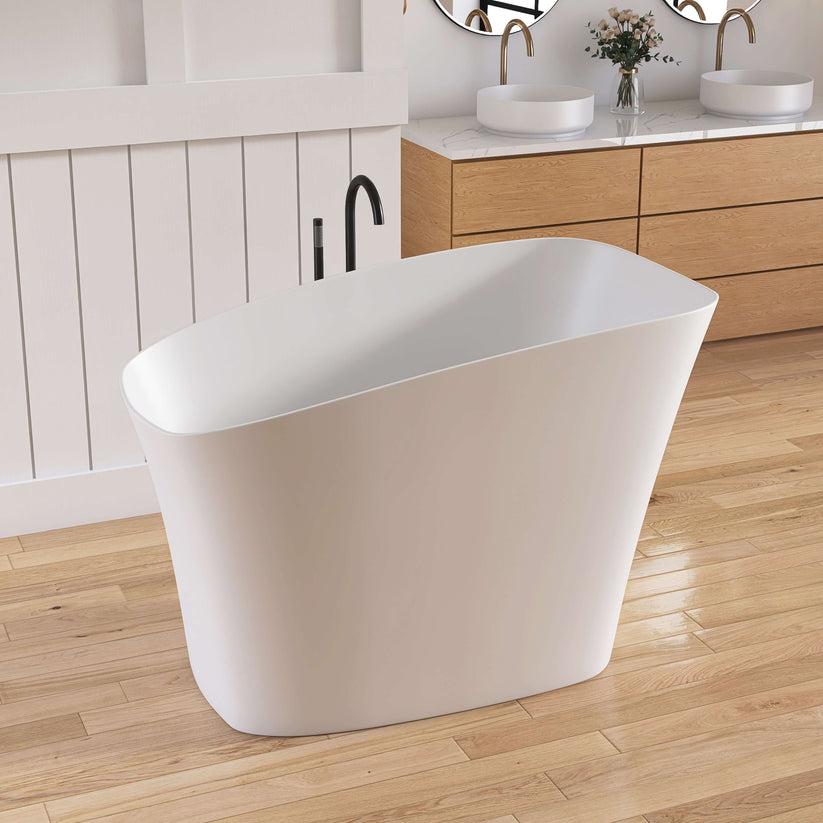
These tubs are an ideal solution for homeowners seeking a luxurious bathing experience without sacrificing valuable floor space.
Explore Medunjess Japanese Soaking Tubs →
Installation Considerations
Floor Load and Bathroom Structure
Because soaking tubs are deep and hold a significant volume of water, ensure your floor structure can support the weight, especially in upper-floor installations.
Drainage, Plumbing, and Ventilation
Proper drainage and ventilation are essential to prevent moisture buildup and ensure long-term durability.
Freestanding vs Built-In Japanese Soaking Tubs
- Freestanding tubs offer design flexibility and visual impact.
- Built-in tubs provide a cleaner, integrated look and may save space in narrow bathrooms.
Frequently Asked Questions About Japanese Soaking Tubs
Q: Are Japanese soaking tubs comfortable for tall people?
A: Yes, although shorter in length, their depth allows tall users to soak comfortably in a seated position.
Q: Do Japanese soaking tubs use more water than regular tubs?
A: Not necessarily. Their smaller surface area often balances out the extra depth.
Q: What material is best for a Japanese soaking tub?
A: Acrylic is lightweight and budget-friendly, while solid surface offers superior durability and a premium feel.
Q: Are Japanese soaking tubs good for daily use?
A: Absolutely. Many homeowners use them daily for relaxation and stress relief.
Q: Are Japanese soaking tubs good for small bathrooms?
A: Yes. Japanese soaking tubs are compact in length but deep in design, making them ideal for small bathrooms, apartments, and urban homes.
Final Thoughts
A Japanese soaking tub is more than a space-saving bathtub—it’s an upgrade to your daily wellness routine. Whether you live in a small apartment or are designing a luxury bathroom retreat, this unique tub style offers comfort, efficiency, and timeless design.
With the right size, material, and installation plan, a Japanese soaking tub can transform even the smallest bathroom into a personal spa sanctuary.
Explore Japanese Soaking Tubs by Medunjess
If you’re planning a bathroom upgrade focused on relaxation, efficiency, and modern design, Medunjess offers a curated range of Japanese-style soaking tubs designed for contemporary living.
- Extra-deep soaking depth for full-body immersion
- Compact designs ideal for small and urban bathrooms
- Modern minimalist aesthetics
- Durable materials with easy maintenance


